Guided by global sustainability benchmarks and the Sustainable Development Goals (SDGs), we developed the Corporate Sustainability Model, which guides our actions in environmental, social, and corporate governance matters.
This model enables us to manage risks, strengthen the competitiveness of the portfolios we manage, and consolidate a long-term vision based on responsible practices.
Corporate Model for Sustainability
Our model is based on material matters identified for the sustainability of the vehicle and the responsible management of the assets we manage.
To contribute to the solution of the environmental and climate challenges facing society, Pei’s real estate manager promotes various initiatives aimed at improving the eco-efficiency of the assets within the portfolio.
What initiatives support it?
Pei Asset Management, in its role as real estate manager, adhered to Colombia’s National Net Zero Carbon Buildings Roadmap, led by the Ministry of Environment and Sustainable Development, which seeks to achieve carbon neutrality for the country’s buildings by 2050.
In line with this commitment, carbon footprint measurements of the portfolio and technical diagnostics have been conducted since 2020 to identify opportunities for improvement in resource consumption and the comfort conditions of the assets.
Profitable Growth
Growth and economic strength are priorities for Pei and its stakeholders…
Growth and economic strength are priorities for Pei and its stakeholders. Therefore, we work to promote conditions that favor the development of the vehicle and generate value for investors, tenants, suppliers, and the communities in which it operates.
What initiatives support this?
To promote profitable growth with positive impact, Pei Asset Management actively participates in processes to modernize and strengthen the capital market and the real estate sector in Colombia. This is accomplished through participation in industry associations and trade organizations, from which regulatory proposals and best practices are promoted that contribute to the sustainable development of the industry.
Contribution to the well-being of the community, tenants, and suppliers
Pei Asset Management understands its responsibility and the potential impact it has…
Contribution to the well-being of the community, tenants, and suppliers
Pei Asset Management understands its responsibility and the potential impact it has to contribute to its various audiences. Thus, ensuring their well-being and sustainable growth, various actions are implemented to motivate these stakeholders to adopt ESG practices and promote their growth alongside the vehicle.
Which initiatives support this?
Tenants: Pei’s tenants find an ally that, in addition to offering physical spaces, seeks to contribute to the stabilization, execution, and development of their business. Through the strategy known as Flexible Spaces, Pei offers tenants and concessionaires fit-out, furniture, and facility management services so that tenants can focus on running their business without worrying about their real estate needs.
Suppliers: Suppliers are an essential stakeholder group for the development, operation, and maintenance of Pei’s assets. For this reason, it is of utmost importance to encourage them to implement practices that allow them to provide their services in the best possible way. We foster the development of our suppliers through periodic evaluations and feedback.
Community: Pei and its manager seek to contribute to the well-being of the communities where the vehicle is present, through associations and synergies with different stakeholders to generate a positive impact on the regions surrounding the assets.
Risk Management
Risk management is a key component to ensure the continuity and sustainability of…
Risk management is a key component to ensure the continuity and sustainability of the business. Therefore, the risks to which Pei is exposed are periodically analyzed considering the economic context, the real estate sector environment, and the regulatory framework.
This process allows strengthening risk prevention and management mechanisms, as well as anticipating potential impacts on the vehicle.
What initiatives support it?
Pei Asset Management conducts periodic exercises to update Pei’s operational and strategic risk matrices, with the objective of strengthening or implementing new controls.
During 2023, controls associated with information security and cybersecurity risks were defined and implemented, and the General Policy on Information Technology Infrastructure, Information Security, and Cybersecurity was published, which guides the handling of information within the organization.
Additionally, the manager is developing a climate change risk matrix in order to identify mitigants and control mechanisms for the protection of the asset portfolio.
In a complementary manner, digitalization and process modernization initiatives are promoted, which contribute to mitigating operational risks, reducing human errors, and keeping the vehicle at the forefront in technological matters.
Human talent development and well-being
Pei Asset Management, in its capacity as Pei’s real estate manager, recognizes the i…
Pei Asset Management, in its capacity as Pei’s real estate manager, recognizes the importance of promoting and encouraging the training and well-being of the people responsible for managing the vehicle, in order to develop the commitment and the adaptability and dynamism skills required to implement the established strategies.
What initiatives support it?
Talent well-being and engagement: To safeguard the health and safety of its employees, the manager has an Occupational Health and Safety System and an Extra-legal Benefits Program that seeks the comprehensive development of individuals.
Professional development and career plan: To develop and retain the best talent, the manager ensures it strengthens the technical and managerial capabilities of the work team that are useful for performing their roles and adapting to new technologies and trends. It also provides its employees with the tools to become the protagonists of their professional careers through the joint definition of career plans, and offers training and educational benefits to promote the continuous updating of knowledge.
Diversity, equity and inclusion: The manager recognizes the importance of offering a safe and inclusive workplace for its work team through mechanisms that guarantee freedom of thought and expression, as well as the inclusion of people in their diversity. A diverse environment increases innovation and creativity and provides comfort and freedom for the work team to generate ideas.
Responsible Investment
Responsible real estate investments ensure a stable and lasting business over time…
Responsible real estate investments ensure a stable and lasting business over time, as quality assets in which different economic sectors can develop their activities represent a driver for the country’s growth and positively impact their users and the surrounding community.
Therefore, Pei has integrated the evaluation of environmental, social, and corporate governance factors into the investment decision-making process to ensure that the investment is aligned with the expectations of different stakeholders and comprehensive risk management for the sustainability of the business over time.
What initiatives support it?
The asset manager incorporates different economic, environmental, social, and governance factors into the investment opportunity evaluation and selection process in line with the provisions of the Principles for Responsible Investment (PRI), an association of which it is a member.
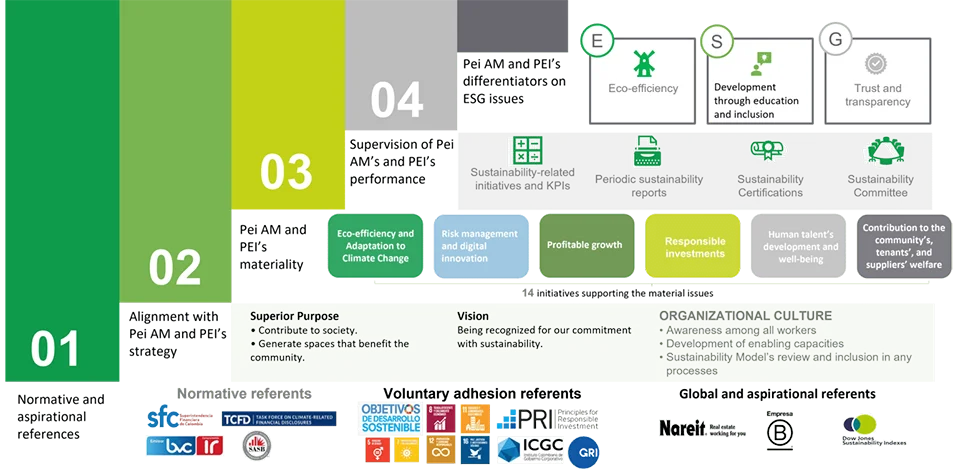
Diagram representing PEI's Corporate Sustainability Model, organized into five progressive levels: regulatory and aspirational benchmarks; alignment with the PEI AM and PEI strategy; materiality, which identifies priority sustainability issues; performance oversight through initiatives, indicators, reports, certifications, and the sustainability committee; and ESG differentiators in the environmental, social, and corporate governance dimensions: eco-efficiency, development through education and inclusion, and trust and transparency. The base presents the main regulatory benchmarks, voluntary memberships, and global standards that support the model.
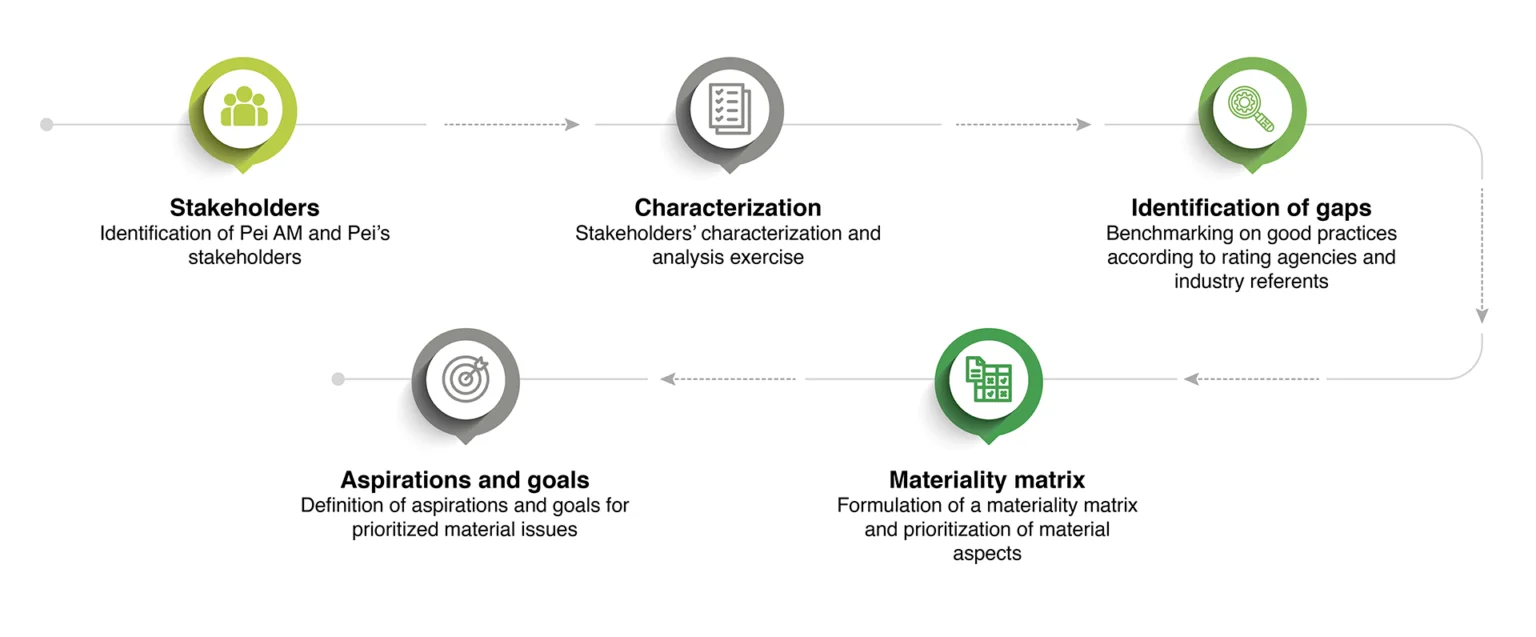
Model Construction
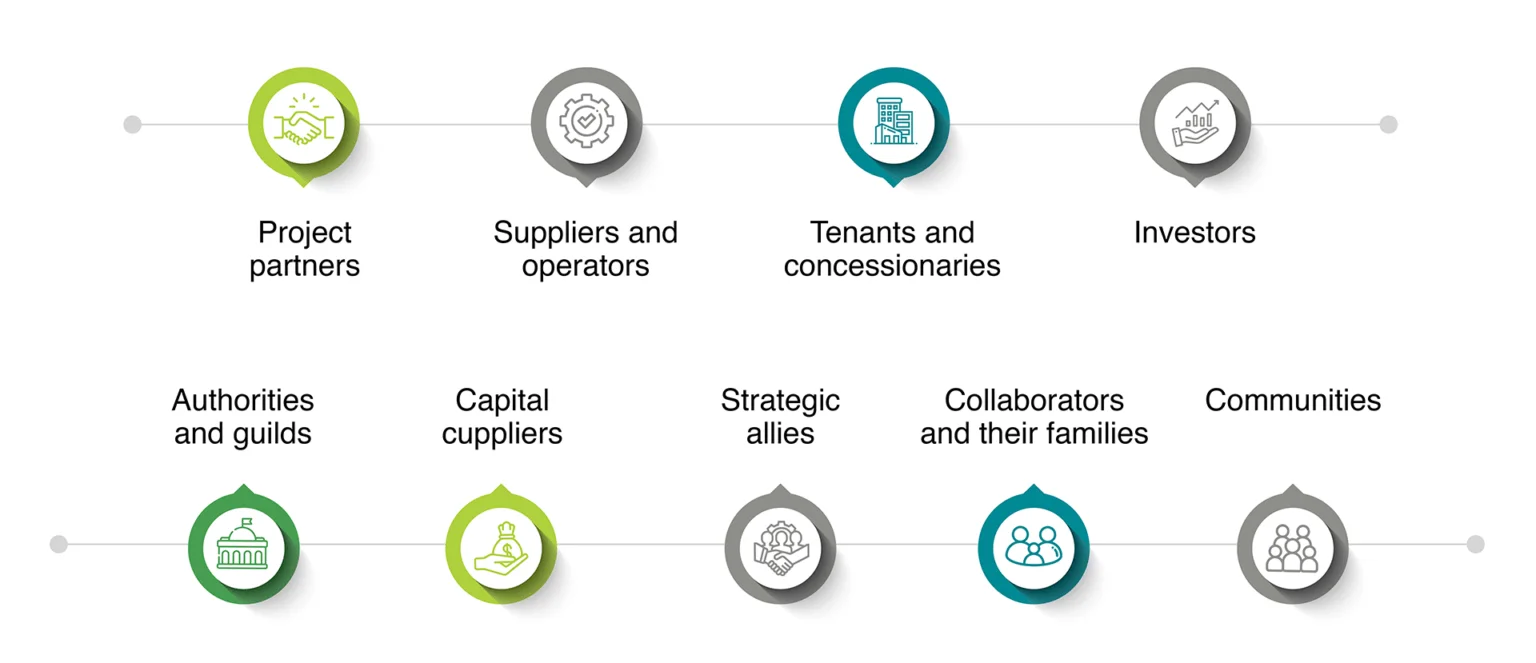
Stakeholder groups
Materiality matrix
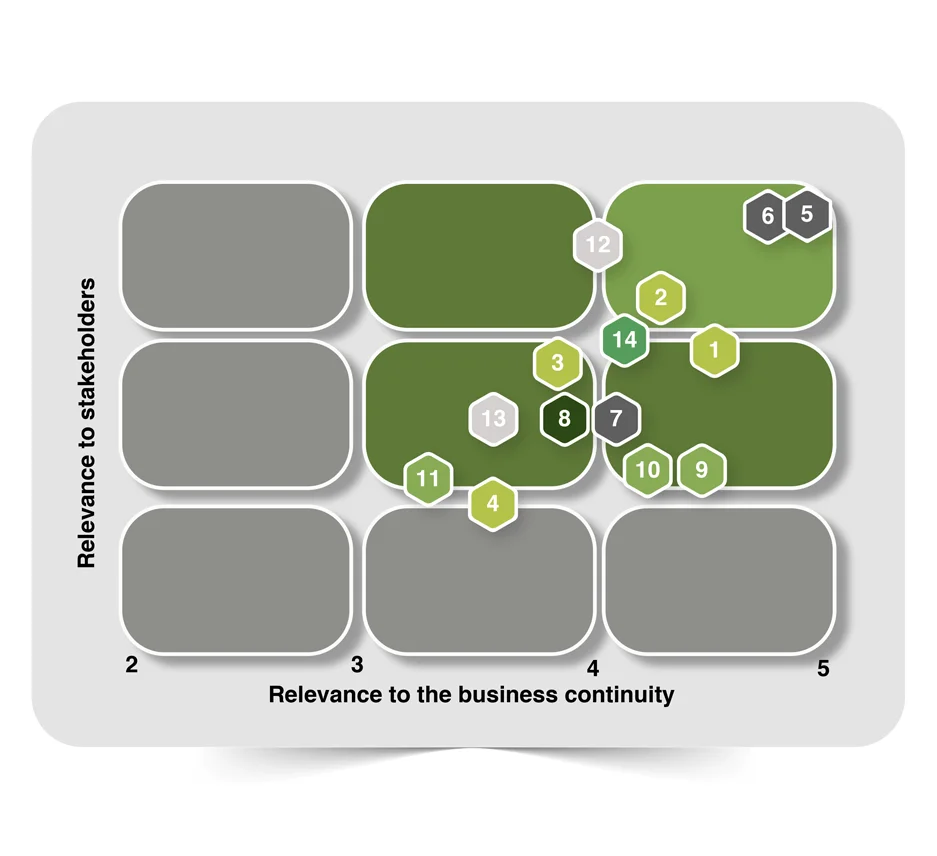
The materiality matrix consolidates the priority issues for Pei Asset Management and its stakeholders, guiding the vehicle’s environmental, social, and governance management.
Eco-efficiency and climate change adaptation
Renewable and non-polluting energy
Carbon footprint
Water management
Waste management
Risk management and digital innovation
Risk management
Corporate governance, compliance, and business ethics
Innovation, digitalization, and information security
Profitable growth
Economic development and contribution to capital market growth
Development and well-being of human talent
Talent well-being and engagement
Professional development and career plan
Diversity, equity, and inclusion
Contribution to the well-being of the community, tenants, and suppliers
Tenant and supplier development
Social impact (donations, territorial development, and civic engagement)
Responsible investment
Integration of ESG factors in asset selection
Corporate sustainability model
Diagram representing PEI's Corporate Sustainability Model, organized into five progressive levels: regulatory and aspirational benchmarks; alignment with the PEI AM and PEI strategy; materiality, which identifies priority sustainability issues; performance oversight through initiatives, indicators, reports, certifications, and the sustainability committee; and ESG differentiators in the environmental, social, and corporate governance dimensions: eco-efficiency, development through education and inclusion, and trust and transparency. The base presents the main regulatory benchmarks, voluntary memberships, and global standards that support the model.
Model Construction
Stakeholder groups
Materiality matrix
The materiality matrix consolidates the priority issues for Pei Asset Management and its stakeholders, guiding the vehicle’s environmental, social, and governance management.
Eco-efficiency and climate change adaptation
Renewable and non-polluting energy
Carbon footprint
Water management
Waste management
Risk management and digital innovation
Risk management
Corporate governance, compliance, and business ethics
Innovation, digitalization, and information security
Profitable growth
Economic development and contribution to capital market growth
Development and well-being of human talent
Talent well-being and engagement
Professional development and career plan
Diversity, equity, and inclusion
Contribution to the well-being of the community, tenants, and suppliers
Tenant and supplier development
Social impact (donations, territorial development, and civic engagement)
Responsible investment
Integration of ESG factors in asset selection
Loading...
This site is registered on wpml.org as a development site. Switch to a production site key to remove this banner.